For days, stopping at one container yard after another, I had been yearning for Tahiti. I am plowing through Hampton Sides’ book, The Wide Wide Sea, about Captain Cook’s 18th-Century explorations of the South Pacific. His crew, grimy and horny, always looked forward to Tahiti with its wild exotic flowers, cooling waterfalls, fresh fruit, and half-naked girls. Besides, our ship was running low on fresh fruit, and Tahiti has the best pineapples ever.
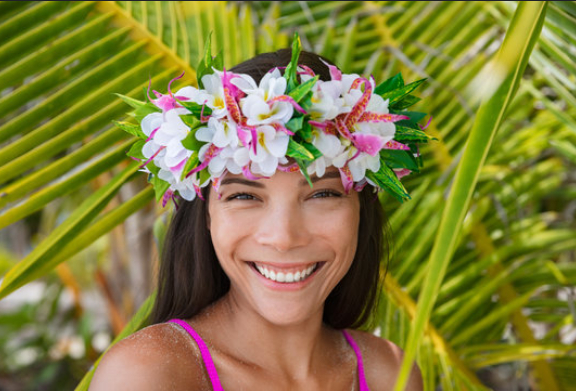
Pauliana Angelfromheaven Felise-Vitale Guttenbeil, Miss American Samoa 2024-25
Samoa!!! All I ever associated with Samoa were the yummy Girl Scout cookies of the same name, laced with chocolate and coconut. Couldn’t wait to snag some from the source. We parked the ship in Pago Pago, the capital of American Samoa, which sounded like it should be paved with pricey resorts and ringed with pink sandy beaches. Turns out, that place is …. Bora Bora. We’re not going there.
We are aboard the Grand Princess! This is the oldest ship in the fleet, and back when it was launched in 1998 it was the fastest and the biggest Princess. Now it’s the smallest, which you’d never know if you were doing 3300 steps per day just getting from the putting green to the spa and back to the stateroom. It’s quite beautiful with its wooden moldings and pretty lattices. It doesn’t look the least bit like Donald Trump’s gilded rococo apartment, as some newer ships do.
We got here during Paris fashion week, and though my invitations to the shows got lost in the mail yet again this year, we did spot a model from the Chanel runway gliding around our neighborhood one evening. I knew because she was about nineteen years old, five-eleven, slim as bamboo, with a platinum Dutch boy haircut, and also I saw her on YouTube. She was with two vastly inferior guys who trailed behind her.
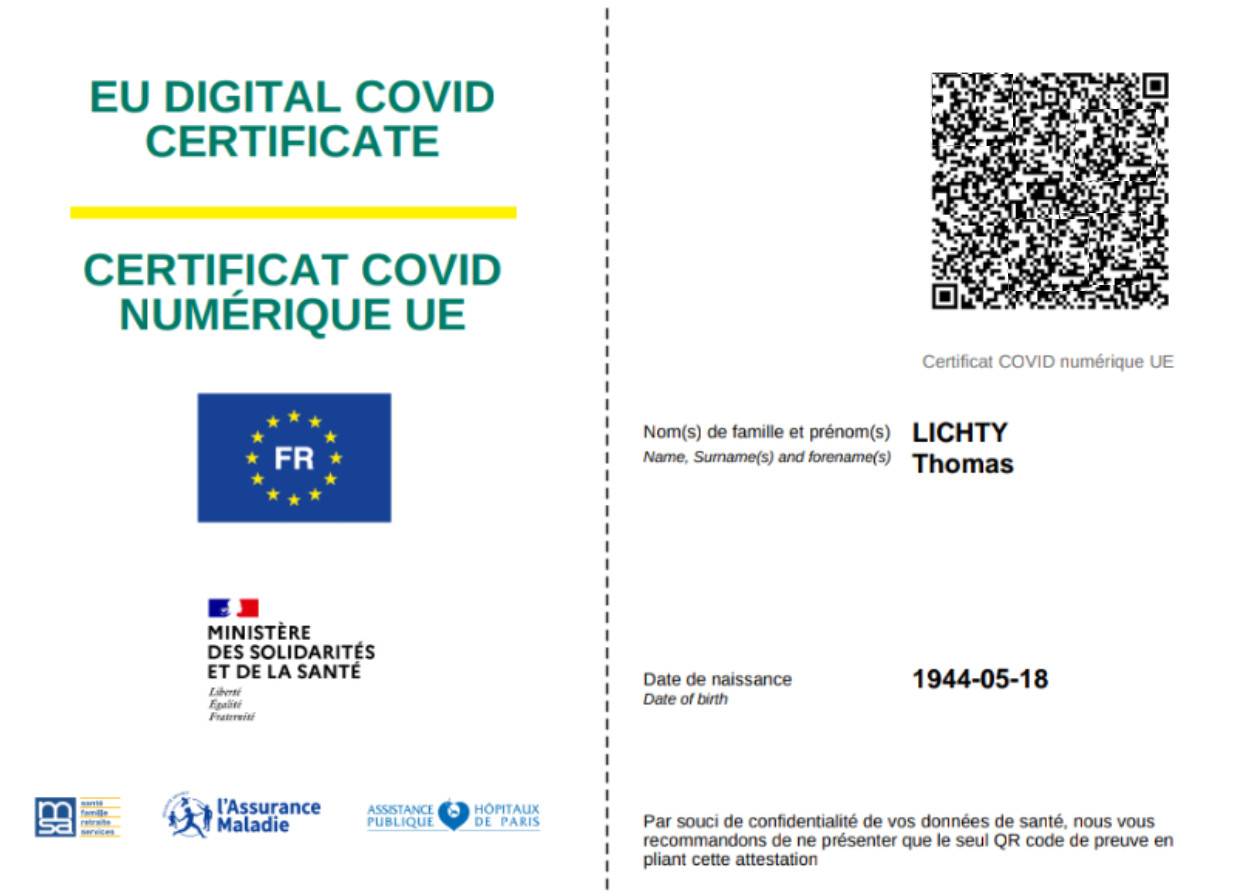
It’s normal to be wary of what is foreign, so we understood completely when our friends questioned this trip to Europe. But Covid-wise, we feel very safe here. We are asked for our “passe sanitaire,” or vaccination certificate, at every restaurant, museum, and theater, even outdoors. (This is a QR code on our phones, but they like our cardboard ones too.) Everybody wears a mask indoors or risks one of those disapproving Gallic callouts complete with frown, or at worst, a bevy of waiters running towards you to block the door.
Tom’s COVID Certificate
I love President Macron’s sensible vaccination passport idea: “Skip the vaccine if you want, but we won’t let you go anywhere fun.” That is so sensible. There is a much more laid back atmosphere here about Covid: people get vaccinated, wear masks, and carry on.
We’re in a new neighborhood for us, on the Left Bank just across the Seine from Notre Dame. We have a terrific view of her, and her scaffolding, and most impressive, a crane twice the height of the cathedral that moves things around by day, and stands tall and lit like a light sabre by night. It’s our night light, in fact. It’s one of those places where you can be indoors and still feel like you’re outdoors, because the street is lively 20 hours a day.
The Notre Dame crane outside our window by night
Since we spend so much of our time sitting in cafes and eating, it was thrilling to find bistros in abundance all around us, most of them cheaper than those in Portland. Still, we eat at home a lot because it’s hard to resist the morning markets with their fresh melons, amazing baguettes, roast chicken, and a host of yummy things with melted cheese on top.
But we don’t just eat. We’ve done things. The wonderful Musee de Carnavelet has reopened and we went to see an exhibit of Henri Cartier-Bresson photos of Paris in the ’40s and forward, black and white and grainy. One of the joys of this city is though people dress differently now, the streets and tall Haussmanian buildings have not changed, and ornate store fronts with painted glass are still treasured. The croissants, the baguettes, and the eclairs they buy are the same. People—alone or in twosomes or in rambunctious groups—still go to cafés to write, to think, to gossip, to flirt, and to argue about the meaning of life.
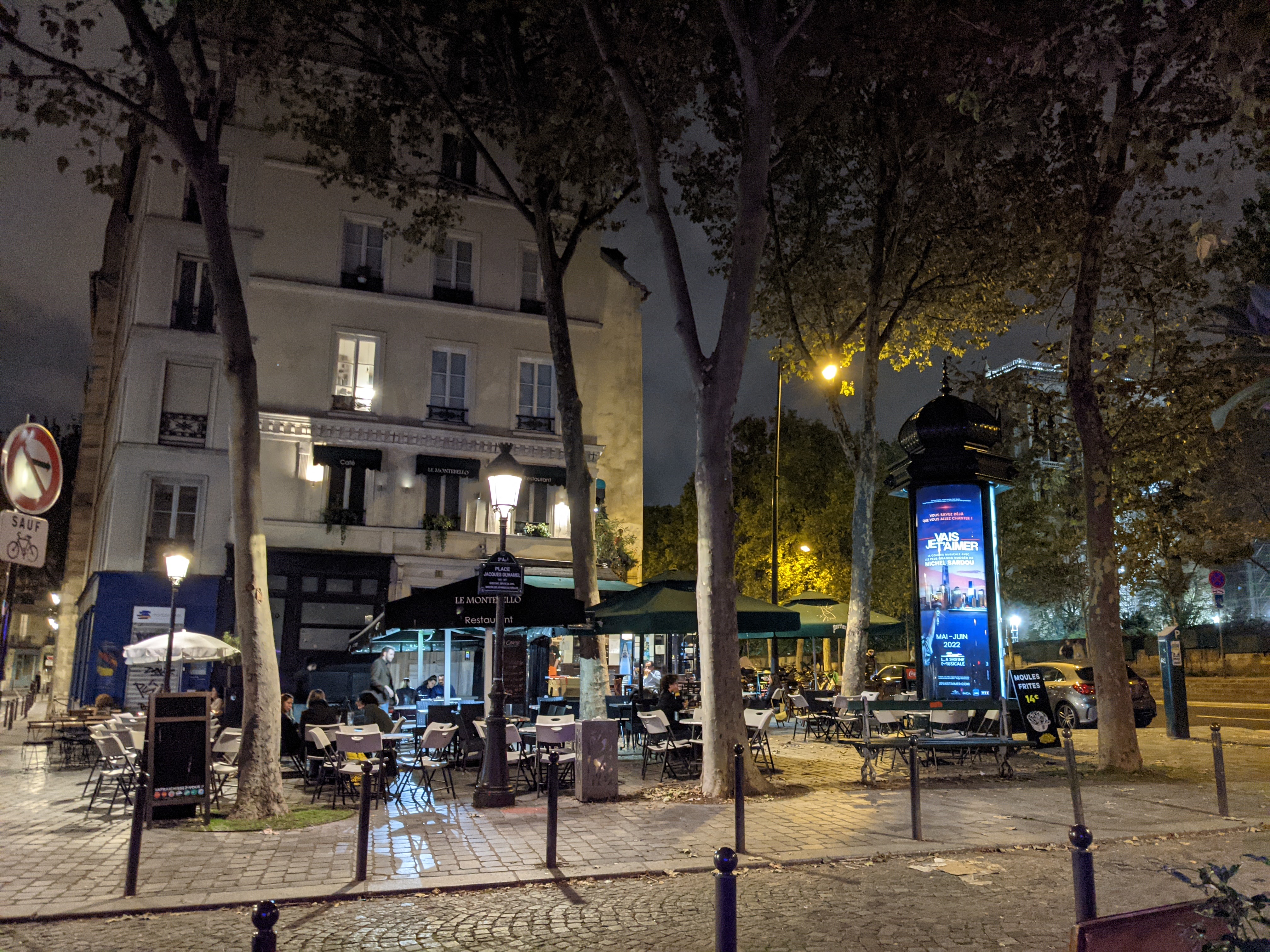
Le Montebello—our favorite café, just around the corner from our apartment
I do think that the amount of hugging and air kissing has decreased, but let’s hope that’s temporary.
We also stopped by the Arenes de Lutece, the ruins of a 2000 year-old Roman amphitheater which had been slowly buried by a cemetery, a convent, and buildings along Rue Monge. It was 1869 when a team excavating for a tram station began to uncover the stadium seating, the lion’s den, and a generous stage area. Gradually dug out and revealed, it’s now a public park that one just wanders into to eat a sandwich or meet a friend. During our visit, we were gifted with the rare appearance of two of Paris’ finest mounted police, who trotted in, looked around, and trotted out. (Police also appear on bikes, motorcycles, and in cars, but rarely on foot. Though scooters, electric and otherwise, have taken the city by storm, there are no scootered police, yet.)
Local police visit Arenes de Lutece on horseback
Alas, already, after only eleven days here, there are many more adventures to recount. But I think I hear a café calling. Watch this space.
After sleepy St. Moritz, it was time to take the Glacier Express, a full eight-hour tour of mountains, trees, cows, rushing glacial rivers, sheep, and perky Swiss villages—all viewed through panoramic windows, because the good stuff is too high to see from waist level.
I just did something I never thought I would—hiked an Alp. I must admit that Tom and I hiked our Alp downhill after a lovely ski gondola ride uphill. (That’s me above, struggling with the elements on the perilous downhill journey.)
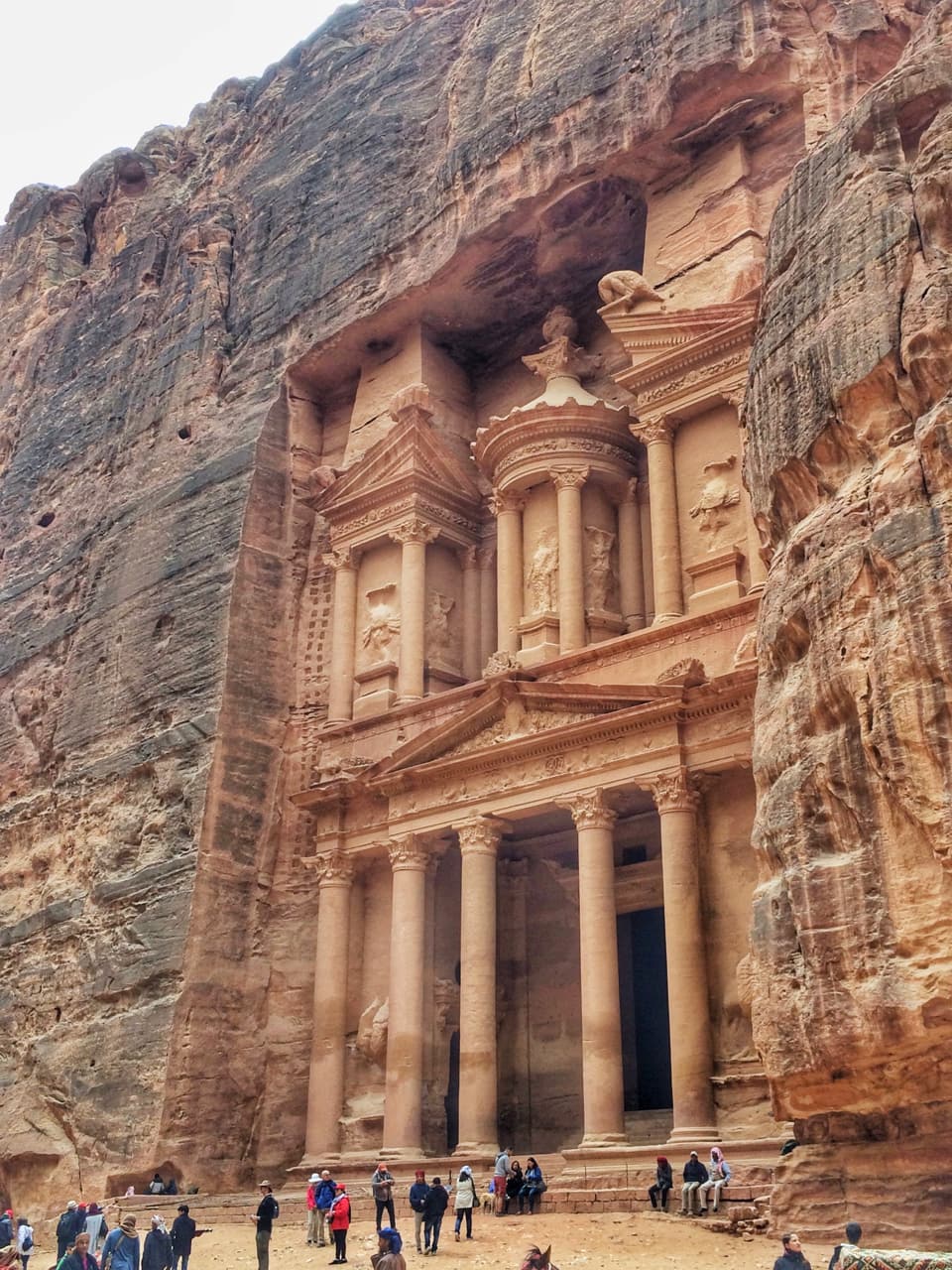
People speak of Petra as though it were Oz: the source of all amazement, the end of the rainbow, the most/least obscure/impressive man-made monument in the Middle East, one of the Seven Wonders of the World.






 The Expat Almanac